
Tests
ECG Test Kingston
Book an ECG test in Kingston. Prompt access to consultant-led assessment of chest pain, palpitations, breathlessness and other heart symptoms.
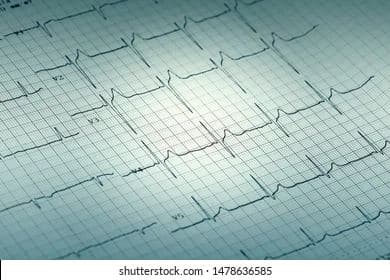
If you've been told you need an ECG test in Kingston, or you're trying to work out whether your symptoms warrant one, the short answer is that it's one of the simplest, quickest and most useful tests we have in cardiology. An ECG (electrocardiogram) records the electrical activity of your heart through small sticky pads placed on your chest, arms and legs. It takes a few minutes, it's completely painless, and the trace it produces can tell us a great deal about how your heart is working in that moment.
In our clinics across Kingston-upon-Thames, an ECG is usually the first investigation arranged when a patient comes in with chest pain, palpitations, breathlessness, dizziness or a family history of heart disease. The test itself takes around five minutes from start to finish, and it can often be carried out alongside the consultation. It's the foundation of a proper cardiac assessment, and in many cases it's the test that points the assessment in the right direction before any more detailed imaging is needed.
What an ECG Actually Shows
Your heart is essentially an electrical pump. Each heartbeat is triggered by a small electrical signal that travels through the heart muscle in a coordinated way, and an ECG captures that signal as a series of waves on paper or a screen. Those waves show whether your heart rhythm is normal, whether there are signs of strain on the heart muscle, whether you've had a heart attack in the past, and whether the electrical conduction system itself is working properly.
Patients are sometimes surprised at how much information a five-minute test can give. A standard 12-lead ECG looks at the heart from twelve different electrical angles at once, which is why it's so useful. It can spot atrial fibrillation, other arrhythmias, signs of an old or recent heart attack, evidence of an enlarged or thickened heart muscle, conduction problems like heart block, and electrical patterns linked to inherited heart conditions. It can also be completely normal, which is itself reassuring information when it's interpreted in context.
When You Might Need an ECG
There are several situations in which an ECG is worth doing, and the threshold for arranging one is generally low. The test is quick, safe and informative, so there is rarely a reason not to do one when there is any cardiac concern.
An ECG is worth considering if you're experiencing chest pain or tightness, particularly if it gets worse with movement and eases with rest. Chest pain that is severe, lasts more than 15 minutes or does not settle is different, and means calling 999 rather than booking an appointment. An ECG is also used for palpitations, unexplained breathlessness, dizziness or blackouts, unusually low or high heart rates, or a sudden drop in your exercise tolerance. Any of these symptoms in someone with a family history of heart disease, high blood pressure, raised cholesterol or diabetes makes the case stronger still.
Beyond symptoms, an ECG is often used as a baseline test before starting certain medications, as part of pre-operative assessment, or for medical clearance for jobs and activities that require it. The DVLA, for example, has specific cardiac requirements for certain driving licences, and an ECG forms part of that assessment.
What Happens During the Test
The practical experience of having an ECG is genuinely straightforward. You'll be asked to lie on a couch, and the technician or doctor will place ten small sticky electrodes on your chest, arms and legs. Men with chest hair may have a small area shaved so the electrodes stick properly, and any body lotion in the area is wiped off first. The electrodes are connected to the ECG machine by light cables.
Once everything is in place, you'll be asked to lie still and breathe normally for about thirty seconds while the trace is recorded. That's it. There's no electricity going into your body, no discomfort, and you can get up, dress and go straight back to normal activities afterwards. The only common complaint is from people who don't like having electrodes stuck to the skin, and even that is a very minor inconvenience for the amount of information the test provides.
The whole appointment, including history-taking and discussion of results, usually takes around twenty to thirty minutes in a private consultation setting.
How the Results Are Interpreted
This is where the value of a specialist matters. An ECG looks like a series of squiggles to most people, but to a trained cardiologist each part of the trace has a specific meaning. The P wave shows the activity of the upper chambers, the QRS complex shows the lower chambers, and the T wave shows the heart recovering between beats. Subtle changes in their shape, timing or relationship to each other can point to specific conditions.
ECG interpretation is more reliable when it is done by a specialist cardiologist than when it rests on software algorithms alone, because context matters enormously. Two patients can have very similar-looking traces, and yet one is entirely normal for them while the other points to a serious underlying problem. Age, sex, ethnicity, body shape, athletic background and symptoms all change how a trace should be read. Software-generated reports are a useful starting point, but they miss nuance and they often over-call abnormalities that turn out to be normal variants. A proper specialist read avoids both unnecessary worry and missed diagnoses.
Dr Jogiya will usually go through the findings with you on the screen, explain what's normal and what, if anything, needs further investigation, and discuss next steps. Often the ECG settles the question by itself. Sometimes it prompts further tests like an echocardiogram, a Holter monitor to capture intermittent rhythms, or a stress test to see how the heart behaves under exertion.
Why Setting Matters
Where you have your ECG done isn't a trivial detail. A test is only as useful as the interpretation that follows it, and patients get the most value when the ECG is performed and reviewed by the same clinician who is taking their history and examining them. That is the model used in our Kingston-upon-Thames clinics, so the findings are read alongside your symptoms, examination, blood pressure and family history rather than in isolation, and a plan can be agreed with you at the appointment.
An ECG will often point to a specific diagnosis straight away, or rule one out in a way that genuinely changes the direction of the consultation. That is a great deal of value from a five-minute test, and it is the reason the equipment is kept on hand.
Common Worries About ECGs
A few questions come up regularly in clinic that are worth addressing.
Is an ECG painful or dangerous? No. It's entirely passive. The machine records electrical activity from your body. It doesn't put any current into you.
Can a normal ECG miss heart problems? Yes, sometimes. A resting ECG only shows the electrical activity at the moment the trace is recorded. If your symptoms come and go, a single ECG might be normal even when something is genuinely happening. That's why we sometimes follow up with a Holter or longer-term ambulatory monitor.
Does an abnormal ECG mean something serious? Not necessarily. Plenty of "abnormalities" picked up by ECG software are normal variants in healthy people, particularly in athletes. Proper interpretation is what separates a meaningful finding from a benign one.
How often should I have an ECG? There's no fixed answer. If you have known heart disease or are on certain medications, an annual ECG is often part of routine monitoring. For most healthy adults with no symptoms, ECGs are done when there's a clinical reason rather than on a fixed schedule.
When to Seek a Cardiology Opinion
Some symptoms need urgent attention rather than a routine appointment. Chest pain that is severe, lasts more than 15 minutes or does not ease with rest, sudden severe breathlessness, or fainting all mean calling 999. If symptoms are worrying but not an emergency, contact NHS 111 or ask your GP for an urgent appointment. Once anything urgent has been excluded, chest pain that worsens with effort, breathlessness that's new or progressive, frequent palpitations, near-fainting, or any symptom in someone with a strong family history of sudden cardiac death should be properly investigated.
Symptoms are often explained away as stress or indigestion for weeks or months before anyone looks at them properly. The earlier they are investigated, the more straightforward the answers tend to be. An ECG is almost always the right starting point, and getting it interpreted by a specialist alongside a proper history is what turns it from a piece of paper into a useful clinical decision.
Conclusion
An ECG is a quick, safe and remarkably informative test, and in our clinics in Kingston-upon-Thames it's the foundation of most new cardiac assessments. The test itself takes minutes. The interpretation, in the right hands, can shape the entire direction of your care. If you've been getting symptoms you can't quite explain, or you simply want a proper baseline check of your heart, an ECG with a specialist review is one of the most worthwhile things you can do.
If you'd like to book an ECG test in Kingston, are experiencing symptoms that concern you, or would like a second opinion on a recent trace, you can contact me, Dr Roy Jogiya, at Kingston Cardiologist to arrange a private consultation. Appointments are available in Kingston-upon-Thames, Wimbledon and central London, in person and virtually, with full diagnostic support on site.
Keep reading