
Conditions
What is heart failure and how is it managed?
What heart failure means, the symptoms people actually describe, how it is diagnosed and the modern treatments that improve both symptoms and survival.
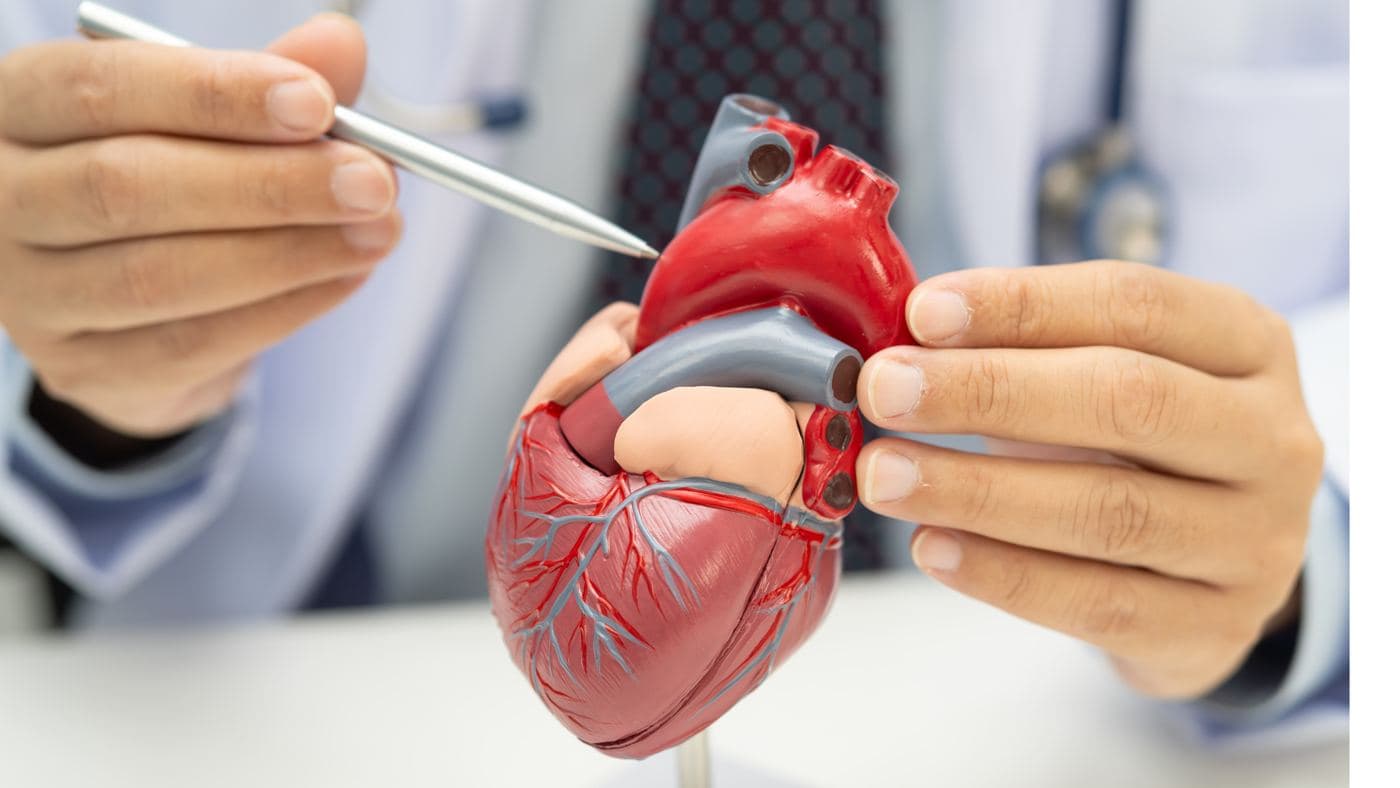
Heart failure means the heart is not pumping blood around the body as effectively as it should. It does not mean the heart is failing to work, and it certainly does not mean it is about to stop. The name is genuinely unhelpful, and correcting it is usually the first thing I do when I give somebody this diagnosis.
It is a long term condition rather than an event, and it is one of the most treatable conditions I look after. Modern treatment does not simply relieve symptoms. It changes how the condition behaves over years, and for many people it improves heart function measurably. That is the single most important thing to understand at the start.
What Is Actually Happening
The heart is a pump with four chambers. Heart failure develops when that pump cannot keep up with what the body is asking of it, either because the muscle has weakened or because it has stiffened and cannot fill properly.
Those two mechanisms give the two main types. In reduced ejection fraction, the main pumping chamber has weakened and empties less completely than it should. Ejection fraction is simply the proportion of blood the chamber pushes out with each beat, and it is measured on a scan. In preserved ejection fraction, the squeeze looks normal but the chamber has become stiff, so it does not relax and fill as it should.
Both produce similar symptoms. They are treated rather differently, which is why establishing which one you have matters more than the label "heart failure" on its own. The preserved type is common, and it is the one more likely to have been missed earlier.
The Symptoms People Actually Describe
Textbooks list breathlessness, swelling and fatigue. What people actually describe is usually more specific than that.
- Breathlessness that has crept up. Not sudden, but a hill or a staircase that used to be unremarkable and now needs a pause.
- Needing more pillows. Feeling short of breath lying flat is a genuinely useful clue, and waking in the night short of breath is one of the more specific symptoms there is.
- Swollen ankles or legs. Typically swelling that builds through the day and is better by morning.
- Fatigue that rest does not fix.
- Weight that climbs quickly. Two or three kilograms across a few days is fluid, not fat, and it is often the earliest warning of all.
Breathlessness is the symptom most easily dismissed, because it arrives slowly enough that people adjust their lives around it without noticing. It is common for somebody to have been avoiding stairs for a long time before they mention it.
What Causes It
Heart failure is nearly always the consequence of something else, and finding that something else is a large part of the assessment.
The common causes are a previous heart attack or narrowed coronary arteries, long standing high blood pressure, heart valve disease, the cardiomyopathies which are diseases of the heart muscle itself, and rhythm disorders. Atrial fibrillation deserves a particular mention, because a persistently fast irregular rhythm can weaken the heart over months and that weakening frequently reverses once the rhythm is controlled.
Uncontrolled high blood pressure is the cause I most wish we caught earlier. It does its damage silently over years.
How It Is Diagnosed
Diagnosis rests on putting a history and examination together with a small number of tests.
A blood test measuring a hormone the stretched heart releases is a good early filter. An ECG looks at the rhythm and at evidence of previous damage. The decisive test is an echocardiogram, an ultrasound scan that measures ejection fraction, assesses the valves and shows how the chambers are filling. Where the picture is unclear or the cause of a cardiomyopathy needs pinning down, a cardiac MRI gives far more detail about the muscle itself, which was my own research field.
How It Is Managed
This is where the last decade has genuinely changed things.
For reduced ejection fraction there are four classes of medication that each independently improve symptoms and survival. They are an ACE inhibitor or the newer combined alternative, a beta blocker, a mineralocorticoid receptor antagonist and an SGLT2 inhibitor. Taken together they are considerably more effective than any one of them alone, and the last of the four also helps people with the preserved type. The NHS page on heart failure sets out the same treatments. Any change to a prescribed medicine is a decision to make with the doctor who prescribed it, not on your own.
Current practice is to start all four at low doses over a few weeks rather than pushing one to its maximum before introducing the next, because the benefit comes from the combination rather than from the dose of any single drug. It asks for closer monitoring of kidney function and blood pressure early on, which is a fair trade for getting somebody onto complete treatment sooner.
Alongside that sit a few other things.
- Diuretics control fluid and relieve symptoms. They are not disease modifying, so they support the four above rather than replacing them.
- Treating the cause. Opening a narrowed artery, repairing a valve or restoring a normal rhythm can change the trajectory completely.
- Devices, where they are indicated. Some people benefit from a pacemaker that resynchronises the two sides of the heart, and some need a defibrillator. Complex device therapy is one of my areas of specialism, and selecting the right patient for one matters enormously.
- Daily weights and a sensible approach to salt and fluid. Weighing yourself at the same time each morning is the most useful self monitoring in all of cardiology.
- Rehabilitation and movement. Supervised exercise improves symptoms and quality of life. A short walk in the fresh air on most days, built up gradually, does more good than an ambitious programme abandoned after a fortnight. Consistency over perfection.
Heart failure is a common finding in people referred with unexplained breathlessness, and some will have been treated for asthma or for general deconditioning first.
Dr Jogiya holds NHS consultant posts at Kingston Hospital and at Guy's and St Thomas' alongside his private practice in Kingston upon Thames, and looks after heart failure at both ends of its course, from an emergency admission once fluid has already built up to unexplained breathlessness in somebody still working. The treatment is the same either way, and how early the diagnosis is made makes a difference to the outlook.
Conclusion
Heart failure is a long term condition in which the heart does not pump as well as it should, and the name frightens people considerably more than the diagnosis warrants. It is investigated with a blood test, an ECG and an echocardiogram, and it is treated with a combination of medicines that improve both how you feel and how long you live, alongside treating whatever caused it.
The people who do best are the ones diagnosed before a crisis, started on complete treatment promptly and reviewed regularly. Alongside that, everyday habits do real work, and the British Heart Foundation has good practical material on living well with heart failure. If breathlessness is severe at rest, or you cannot lie flat, or you have chest pain alongside it, seek urgent medical help and call 999 if it is severe.
If you are becoming breathless on exertion, noticing swelling in your ankles, or you have been told you have cardiomyopathy or a reduced ejection fraction and would like a specialist opinion, you can contact me, Dr Roy Jogiya, at Kingston Cardiologist to arrange a proper cardiac assessment in Kingston upon Thames or central London. Appointments are available in person and virtually, with full diagnostic support including echocardiography and advanced cardiac imaging.