
Prevention
Why your resting heart rate matters
What your resting heart rate reveals about your cardiovascular health, what a normal range looks like, and when a change is worth a specialist assessment.
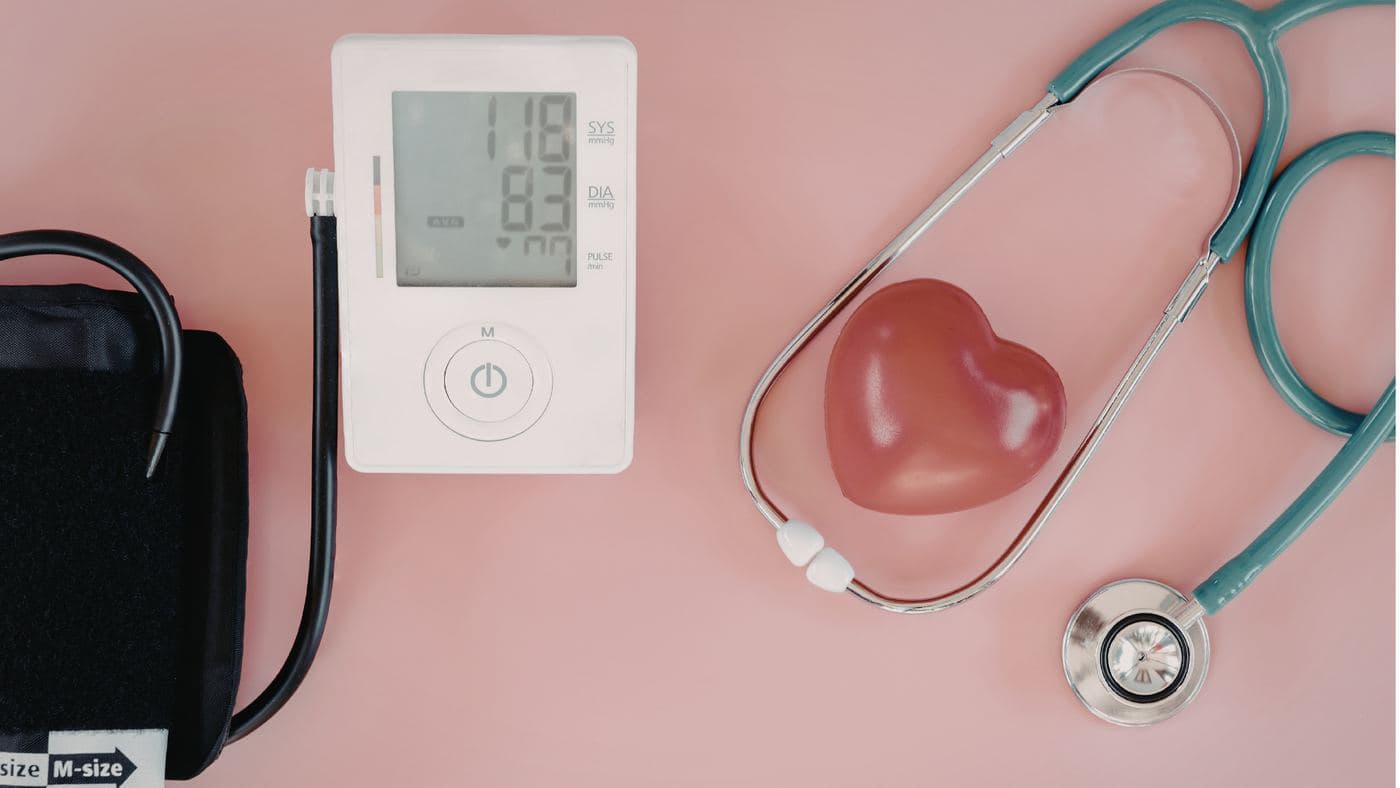
Your resting heart rate is the simplest cardiovascular measurement you will ever take, and it carries far more information than most people expect. For most adults it sits somewhere between 60 and 100 beats per minute, and the honest answer to "what should mine be" is that the healthy range is wide, so your own baseline matters more than the population average.
What we pay attention to in clinic is rarely a single reading. It is the direction of travel, the symptoms sitting alongside it, and what the rest of your numbers are doing. A resting heart rate that has quietly climbed from 62 to 84 beats per minute over a year is worth a proper conversation, even though both of those readings sit inside the normal range.
What the Number Is Actually Measuring
Your heart rate at rest reflects the balance between the two halves of your autonomic nervous system, the part that drives the heart faster under stress and the part that settles it down at rest. In practical terms it is a reasonable proxy for how hard your heart has to work simply to keep you supplied while you sit still.
That is why a well conditioned heart tends to beat more slowly. It moves more blood with each contraction, so it needs fewer contractions to do the same job. A regular walker in their sixties might sit at 58 beats per minute while someone the same age who has been sedentary for a decade sits at 84. Both may feel entirely well, but their hearts are doing very different amounts of work across a day, and across a decade that difference adds up.
A persistently raised resting heart rate is associated with higher cardiovascular risk. It is also one of the first things to shift when something else changes in the body, which is what makes it genuinely useful to track.
The Misconception We Correct Most Often
The assumption we meet most is that low is always good and high is always bad. Neither half of that holds up.
A rate in the low fifties in a fit adult with no symptoms is usually a sign of good conditioning and nothing more. The same rate in someone who is blacking out, feeling light headed on standing or running out of steam on the stairs is a different matter, and it can point to a problem with the heart's electrical wiring such as sick sinus syndrome. That combination is the one most easily reassured too early, because the number on its own can look reassuringly athletic.
The reverse is just as common. A rate of 96 is not automatically heart disease. It can be iron deficiency anaemia, an overactive thyroid, untreated sleep apnoea, dehydration, alcohol, a recent infection, pain, anxiety, or simply being very unfit. A fast resting heart rate often turns out to have a treatable cause that is not primarily a heart problem at all, which is why the assessment looks beyond the heart.
That is not a reason to ignore the number. It is a reason to have it interpreted properly rather than searched for online at midnight.
When a Fast or Irregular Rate Needs a Cardiologist
Some patterns do point at the heart directly, and these are the ones we want people to act on.
Atrial fibrillation is the common one. It tends to produce a pulse that is irregular rather than simply fast, and it matters because it raises stroke risk and is very treatable once it has been identified. Supraventricular tachycardia behaves differently again, arriving suddenly at a much higher rate and often stopping just as abruptly as it started.
If your pulse is irregular, if it climbs sharply without an obvious explanation, or if it arrives with palpitations, breathlessness or chest discomfort, that deserves proper cardiac assessment rather than watchful waiting.
If you have chest pain that is severe, or that spreads to your arm, neck or jaw, or you feel faint alongside it, call 999. Do not wait to see whether your watch agrees with you.
Five Things Worth Doing
- Measure it in the same conditions every time. First thing in the morning, sitting down, after five quiet minutes, before caffeine. Comparing a Tuesday morning reading with a Friday evening one after coffee tells you nothing useful.
- Track the trend rather than the day. One high reading is noise. A steady rise across two or three months is a signal, and that is the pattern worth bringing to an appointment.
- Know your numbers as a set. Resting heart rate on its own is a fragment. Read alongside your blood pressure, your cholesterol, your diabetes risk and your waist measurement it becomes genuinely informative.
- Build aerobic fitness gradually. The 150 minutes of moderate activity a week recommended for adults will bring most people's resting rate down over a few months, and the type of exercise you choose matters less than doing it regularly. A 20 minute walk in the fresh air, most days, beats an ambitious plan you abandon in March. Consistency over perfection.
- Look at sleep, alcohol and caffeine before you assume the worst. Poor sleep and a few glasses of wine will both lift a resting heart rate for days. So will skipping meals and running on caffeine, which spikes adrenaline and pushes both heart rate and blood pressure up.
What Wearables Changed, and What They Did Not
More people now arrive with wearable data, particularly younger patients. That has changed consultations for the better. Somebody can bring six months of overnight readings, which is information that simply was not available a decade ago, and it often turns a vague story into a clear one.
What a watch cannot do is tell you why. It flags that something is different. It does not distinguish atrial fibrillation from a sinus rhythm that is fast for a perfectly good reason, and what a wearable is actually good at is spotting the pattern rather than naming the cause.
An ambulatory ECG monitor worn for one to two weeks is more likely to be useful than a single 12 lead ECG where a resting heart rate is only intermittently abnormal, because the thing being looked for is by definition not happening while somebody sits in a consulting room. A resting trace lasting 10 seconds is a snapshot of a problem that may appear twice a week.
Dr Jogiya holds NHS posts at Kingston Hospital and at Guy's and St Thomas' alongside his private clinics in Kingston upon Thames, and sees the same presentation arrive at very different stages. Sometimes it is picked up after a symptom, and sometimes as a number on a watch that somebody decided to take seriously. Either way, noticing a rising resting heart rate early is worth doing.
Conclusion
Your resting heart rate is not a diagnosis, and no single reading should worry you. What it offers is an early, cheap and repeatable signal about how hard your heart is working, and a trend that moves in the wrong direction is worth investigating while the options are still simple.
Measure it consistently, read it alongside the rest of your numbers, and take a rising trend seriously rather than waiting for a symptom to force the issue. Most of what we find when someone brings us that trend is either reassuring or straightforward to treat, and both of those are better outcomes than not knowing.
If your resting heart rate has changed, if your pulse feels irregular, or if you would like your cardiovascular risk assessed properly rather than in pieces, you can contact us at Kingston Cardiologist to arrange a private consultation in Kingston upon Thames or central London. Appointments are available in person and virtually, with full diagnostic support including ambulatory monitoring where it is needed.