
Tests
Cardiac CT Scan Kingston
Cardiac CT scans explained for patients near Kingston, covering calcium scoring, CT coronary angiography, who benefits and what happens on the day.
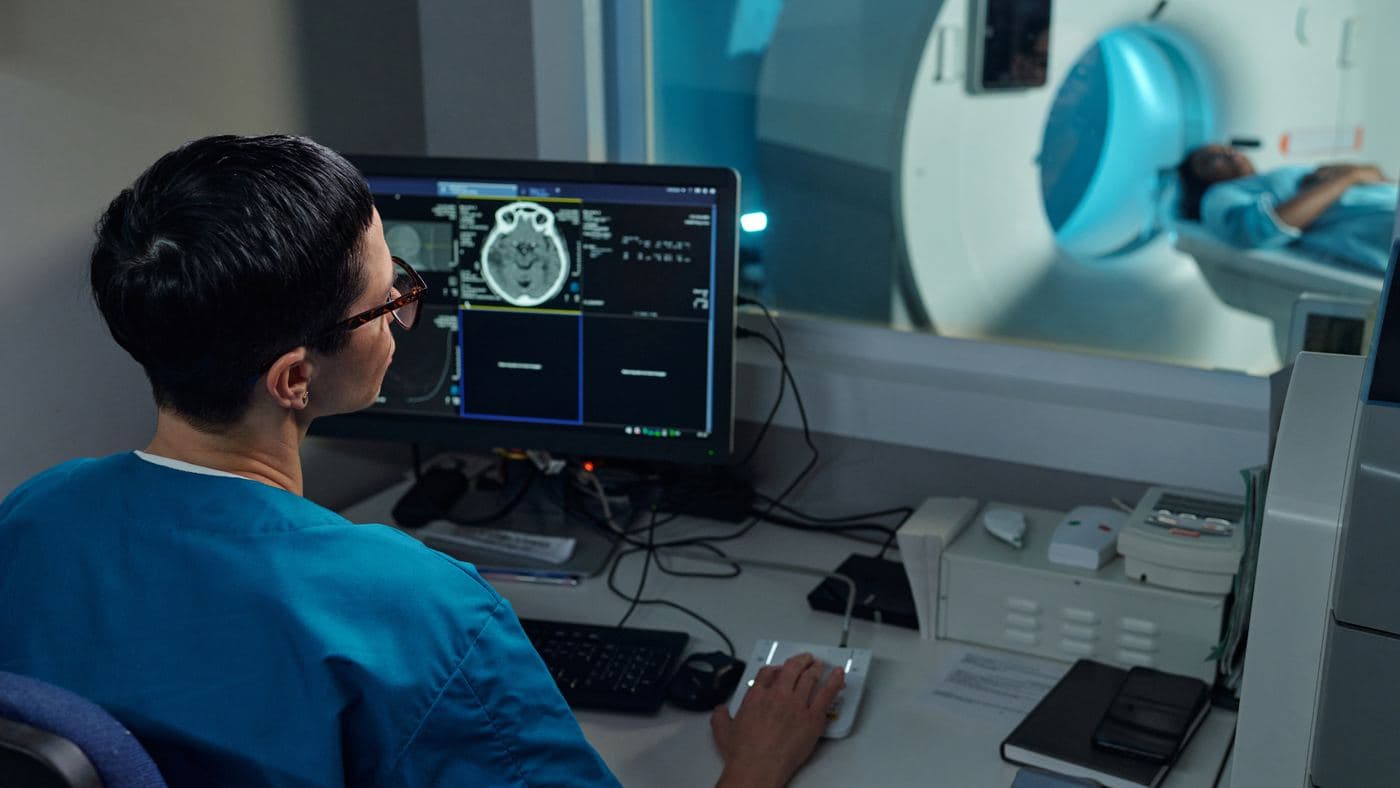
If you have been told to consider a cardiac CT scan, or you have started looking for one near Kingston, the first useful thing to know is that "cardiac CT" describes two quite different tests. One measures calcium in the walls of your coronary arteries and produces a risk score. The other, a CT coronary angiogram, uses contrast dye to photograph the inside of those arteries and show whether any of them are actually narrowed.
They answer different questions, and choosing between them is the part that matters. The decision about which scan to order, and whether either is needed at all, matters more than which scanner the images are taken on.
The Two Scans People Mean
A coronary calcium score is a quick scan without dye. It measures calcified plaque in the artery walls and returns a number. Zero is genuinely reassuring for most people. A high score tells you that atherosclerosis is established and that treatment should be more determined, even if you have no symptoms at all. It is a risk test, not a symptom test, and what a calcium score can and cannot tell you is worth understanding before you have one.
A CT coronary angiogram is the more detailed study. Contrast dye is injected through a cannula in the arm, and the scanner captures the coronary arteries in enough detail to see narrowings directly. This is the test that answers "is my chest pain coming from my heart", and what the day itself involves is straightforward for most people.
The British Heart Foundation's overview of CT scans of the heart is a good plain English starting point if you want to read further.
Who Genuinely Benefits
Cardiac CT earns its place in two situations.
The first is stable chest pain. If you get tightness, heaviness or pressure in the chest on exertion that settles with rest, that pattern is worth investigating properly, because it is the classic description of angina. A CT coronary angiogram is now the preferred first test for most people in this group.
The second is risk clarification. Someone with a strong family history, raised cholesterol, type 2 diabetes or a borderline risk calculation, who cannot decide whether to start a statin, often gets a genuinely useful answer from a calcium score. It converts an abstract percentage into something physical.
Where it earns its place less often is in someone young, symptom free and at low risk who simply wants a scan for peace of mind. Not everybody who asks about a cardiac CT needs one, and saying so is part of the job.
Making sense of a result you already have
People often arrive having already had some form of cardiac testing elsewhere, holding a result nobody has properly explained to them. A calcium score on its own is not a diagnosis, and handing somebody a number without context is how a useful test becomes a frightening one.
A CT coronary angiogram is generally preferred to an exercise ECG as the first investigation for stable chest pain in someone at low to moderate risk, because it looks directly at the arteries rather than inferring a problem from how somebody performs on a treadmill. A treadmill test can be normal in a patient with significant disease, and abnormal in someone with entirely healthy arteries. That said, an exercise test still shows things a CT cannot, including how blood pressure and rhythm behave under load, so it has not been retired.
There is a practical detail that surprises people. Image quality on a CT coronary angiogram depends heavily on your heart rate being slow and regular during the scan, which is why you may be given a beta blocker beforehand and asked to avoid caffeine. A fast or irregular rhythm on the day is one of the more common reasons a scan has to be repeated.
What to Expect on the Day
Neither scan takes long, and neither involves sedation or an overnight stay.
You will usually be asked to avoid caffeine beforehand, and for a CT coronary angiogram you may be given a tablet to steady your heart rate, sometimes an hour or two before you arrive. A small cannula goes into a vein in your arm for the contrast dye, and electrodes on the chest let the scanner time its pictures to your heartbeat.
The scanner itself is a ring that is open at both ends rather than a tunnel, so it rarely troubles people who dislike enclosed spaces. You lie still while the bed moves through it, and you will be asked to hold your breath for a few seconds at a time. When the dye goes in it produces a warm flush and often a metallic taste, both of which pass within a minute and are entirely expected.
Most people are finished within the hour and can drive themselves home. A calcium score needs no dye and no cannula at all, so it is quicker still.
What a Scan Cannot Do
A cardiac CT looks at the coronary arteries. It is not a general heart check, and it will not assess how well the pumping chambers are working or how the valves are behaving. Those need an echocardiogram. It also will not tell you whether a narrowing it finds is actually limiting blood flow, which sometimes needs further testing.
It also carries a small radiation dose and, for the angiogram version, an iodine based contrast dye, so kidney function and allergies have to be checked first. Neither is a reason to avoid a scan that is genuinely indicated. Both are reasons not to have one you do not need.
Most importantly, a scan cannot make the decision that follows it. If significant disease is found, the conversation turns to medication, risk factor control and occasionally an invasive coronary angiogram. That conversation is the point of the exercise.
Getting the Decision Made Properly in Kingston
The route I would suggest is unglamorous but reliable. Start with a proper cardiac assessment rather than with a scan. History still does most of the diagnostic work in cardiology, and a careful description of what your symptoms feel like, when they come and what stops them will usually tell an experienced cardiologist more than any single image.
From there the test can be chosen to answer your actual question, alongside the rest of your cardiovascular risk assessment rather than separately from it.
Because I hold NHS consultant posts at Kingston Hospital and at Guy's and St Thomas' alongside private practice at the clinics I work from around Kingston upon Thames, I read cardiac imaging in both systems, and my own research training was in cardiac MRI. That background is the reason I am fairly conservative about ordering scans and fairly insistent about explaining them afterwards. An image is only as useful as the interpretation attached to it.
If your chest pain is new, severe, spreading to the arm, neck or jaw, or comes with sweating or breathlessness, do not arrange a scan. Call 999, because that pattern needs a heart attack excluded urgently.
Conclusion
A cardiac CT is an excellent test when it is answering a real question. A calcium score tells you how much coronary heart disease you have already accumulated. A CT coronary angiogram tells you whether your arteries are narrowed today. Neither replaces a conversation about your symptoms, your risk factors and what you want to do about them.
If you are searching for a cardiac CT scan near Kingston, the most valuable step is not booking a scanner. It is getting an experienced opinion on whether that scan is the right one, and having the result read properly in the context of everything else about you.
If you have been advised to consider a cardiac CT, or you have a result you would like explained, or you have chest pain that needs assessing, you can contact me, Dr Roy Jogiya, at Kingston Cardiologist to arrange a private consultation in Kingston upon Thames or central London. Appointments are available in person and virtually, with full diagnostic support and access to advanced imaging where it is needed. Established coronary artery disease is very treatable, and knowing where you stand is the part that changes what happens next.