
Tests
Holter Monitor Kingston
What a Holter monitor records, who needs one, how long it is worn and what happens to the results, explained for patients in and around Kingston upon Thames.
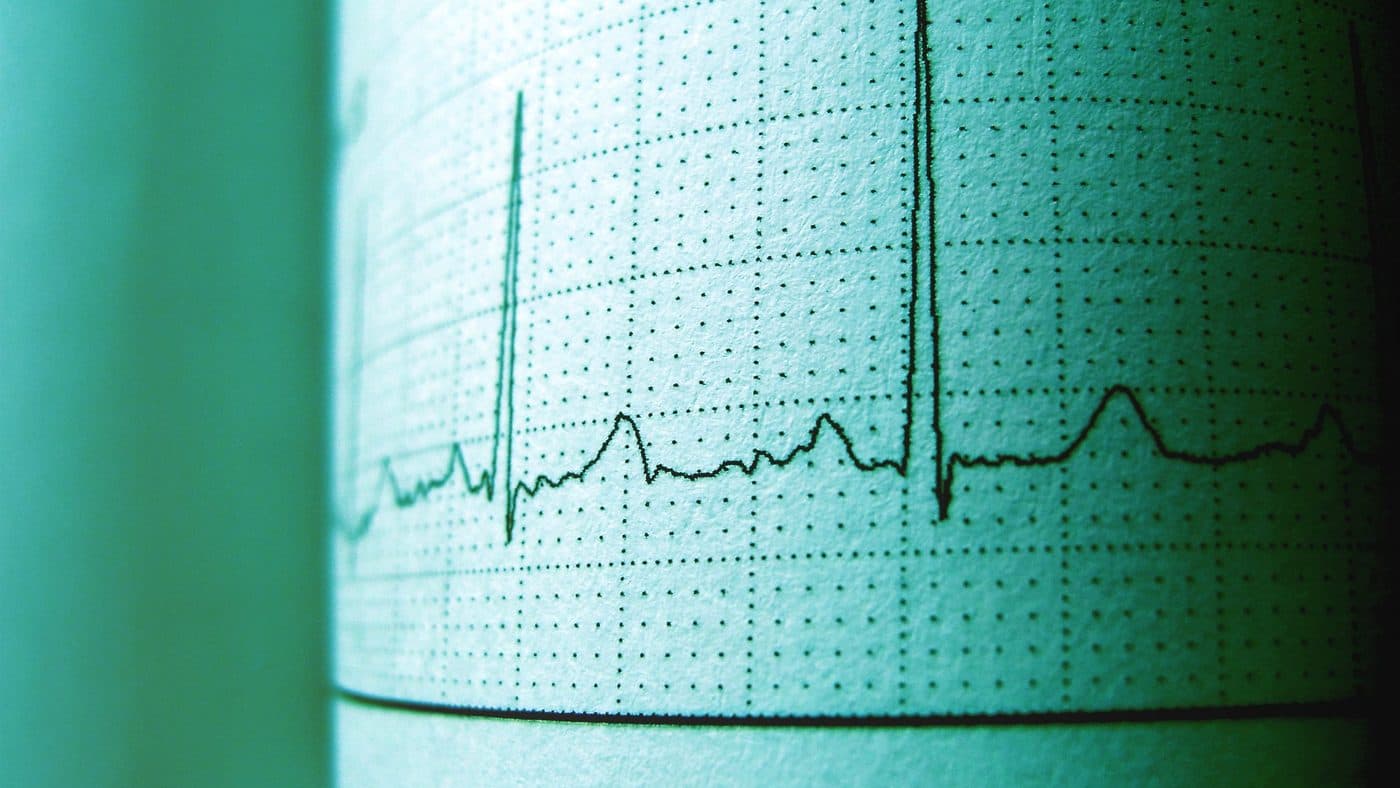
If your heart races, flutters or seems to skip a beat, the chances are it does not do it on cue. Symptoms like these come and go, and a standard ECG taken in a clinic records only a few minutes of your heart's activity. A Holter monitor solves that problem by recording your heart rhythm continuously while you carry on with normal life.
For patients in Kingston upon Thames and the surrounding area, it is often one of the first tests arranged, because the question it answers is such a common one. What is my heart actually doing when I feel these symptoms?
What a Holter Monitor Is
A Holter monitor is a portable ECG. Small sticky electrodes are placed on your chest and connected by thin wires to a small recorder that you wear on a belt around your waist. It records your heart's electrical activity continuously, every beat, for as long as it is worn.
You may also hear it called an ambulatory ECG, a 24 hour ECG or simply a heart monitor. They all describe the same idea. We arrange ECG monitoring over periods from 24 hours to 14 days, depending on how often the symptoms happen.
Why a Standard ECG Is Not Always Enough
A resting ECG test takes a few minutes and is usually the first heart test anyone has. It is excellent at showing what the heart is doing at that moment, and it can show signs of a heart attack, past or present. What it cannot do is catch something that is not happening while you are lying on the couch.
Many heart rhythm problems come and go. Extra beats may arrive in clusters in the evening. An episode of supraventricular tachycardia usually lasts a few minutes. The palpitations of atrial fibrillation may last from a few seconds up to a few minutes. A resting ECG taken between those episodes will often be completely normal, which is reassuring but is not the same as an answer.
Recording for a day or longer turns that around. The aim is to capture the heart rhythm at the moment you feel your symptom, and to see what it does across a full day and night.
Who Might Be Offered One
A Holter monitor is used whenever the question is about rhythm over time. The most common reasons include the following.
- Palpitations, whether that feels like racing, pounding, fluttering or missed beats.
- Dizziness or blackouts, where a heart rate that briefly drops too low or climbs too high needs to be ruled in or out.
- Suspected arrhythmias, such as atrial fibrillation or supraventricular tachycardia.
- Extra beats picked up on a routine ECG, to see how often they happen. With ventricular ectopics, how frequent they are helps decide whether anything needs doing.
- Checking treatment, for example after starting rhythm medication or after an ablation procedure.
If your symptoms come with chest pain, shortness of breath or fainting, or you have palpitations that do not go away, that is not a reason to wait for a monitor. The NHS advice is to call 999 or go to A&E.
What Wearing One Is Like
Fitting the monitor is painless. The electrodes go on your chest and are taped down, and the wires run to the recorder. Some people need a small area of the chest shaved and cleaned first so the electrodes stick properly.
According to the NHS, a portable ECG is usually worn for 24 to 48 hours but can be worn for up to 7 days, and longer recordings are used where symptoms are less frequent. While you wear it you can do everything you normally would, except have a bath or shower, so it is worth planning around that. If you are wearing it for more than a day, you may be shown how to disconnect and reconnect it.
Two things make the recording far more useful. The first is to live normally. If your palpitations tend to come on climbing the stairs or after a coffee, carry on doing those things, because a quiet day that avoids your usual triggers produces a quiet recording. The second is to note the time of anything you feel, along with what you were doing. Matching a symptom to the exact rhythm at that moment is often the whole point of the test.
The electrodes can be very sticky, so mention it beforehand if you have sensitive skin. Some people get a slight rash where the patches were once they come off.
When Symptoms Are Too Rare for 24 Hours
If your symptoms happen once a fortnight, a 24 hour recording is likely to miss them. In that case a longer recording is usually more useful, and the length of monitoring is matched to how often the symptoms come.
For symptoms that are rarer still, there are other options. A cardiac event recorder captures the heart's activity over a longer period or whenever symptoms occur. An implantable loop recorder is a small device placed under the skin of the chest in a minor procedure under local anaesthetic, and it can monitor the heartbeat continuously for up to three years. It is particularly useful for dizzy spells and blackouts that a standard ECG or Holter monitor has not explained.
Consumer devices have changed this area too. Some smartwatches and handheld devices can now record a heart tracing, and wearable technology is increasingly how rhythm problems are first noticed. A recording from your own device is worth bringing to an appointment, although it complements a medical monitor rather than replacing one. Dr Jogiya has advised organisations working on digital heart monitoring, including FibriCheck and AliveCor, so this is an area we know from both sides.
What Happens to the Recording
When the monitor comes off, the recording is downloaded and analysed by a specialist. The report typically describes your heart rate through the day and night, any pauses, any extra beats and how often they occurred, and any episodes of abnormal rhythm, set against the times you noted symptoms.
A normal result is genuinely useful. If you felt your usual palpitations during the recording and your rhythm was normal at that moment, that is good evidence an abnormal rhythm is not the cause, and for many people that alone brings real relief. If nothing was felt and nothing was found, the next question is whether a longer recording is needed.
If the recording does show something, it usually points clearly to the next step. That might be reassurance and attention to triggers, medication, further tests such as an echocardiogram, or a discussion about procedures. If you already have a Holter report and are not sure what it means, a second opinion review can go through it alongside your symptoms.
Arranging a Holter Monitor in Kingston
Dr Jogiya is a consultant cardiologist whose main specialist interest is heart rhythm disorders, and he holds the British Heart Rhythm Society examination in electrophysiology and devices. We see patients at private clinics in Kingston upon Thames and London, and Dr Jogiya is part of the NHS cardiology teams at Kingston Hospital and Guy's and St Thomas'.
You do not need a GP referral to see us privately. If you are using private health insurance, your insurer will usually want a referral and an authorisation number first, so it is worth checking with them before you book an appointment. Monitoring is arranged through a consultation, so that the length of the recording matches your symptoms and the result is interpreted by the person who asked the question. Fees for tests are set by the individual clinics and hospitals.
Conclusion
A Holter monitor is a simple, painless way of recording your heart rhythm continuously while you go about normal life. It is the natural next step when symptoms such as palpitations, dizziness or blackouts come and go too unpredictably to be caught on a standard ECG, and the length of the recording can be matched to how often those symptoms happen.
Its value lies in the match between what you feel and what your heart is doing at that moment. A normal recording during symptoms is reassuring, and an abnormal one usually makes the next step clear. Either way, it turns an uncertain symptom into an answer that can be acted on.
If you have palpitations, dizzy spells or an irregular heartbeat that has not yet been explained, or a monitor result you would like reviewed, you can contact us at Kingston Cardiologist to arrange a heart rhythm assessment in Kingston upon Thames or central London. Appointments are available in person and virtually, with ECG monitoring and other investigations arranged where they are needed.
Keep reading