
Tests
Private Heart Scan Surrey
Consultant-led private heart scans in Surrey, with echocardiography, CT, MRI and rhythm monitoring, and prompt access to specialist assessment.
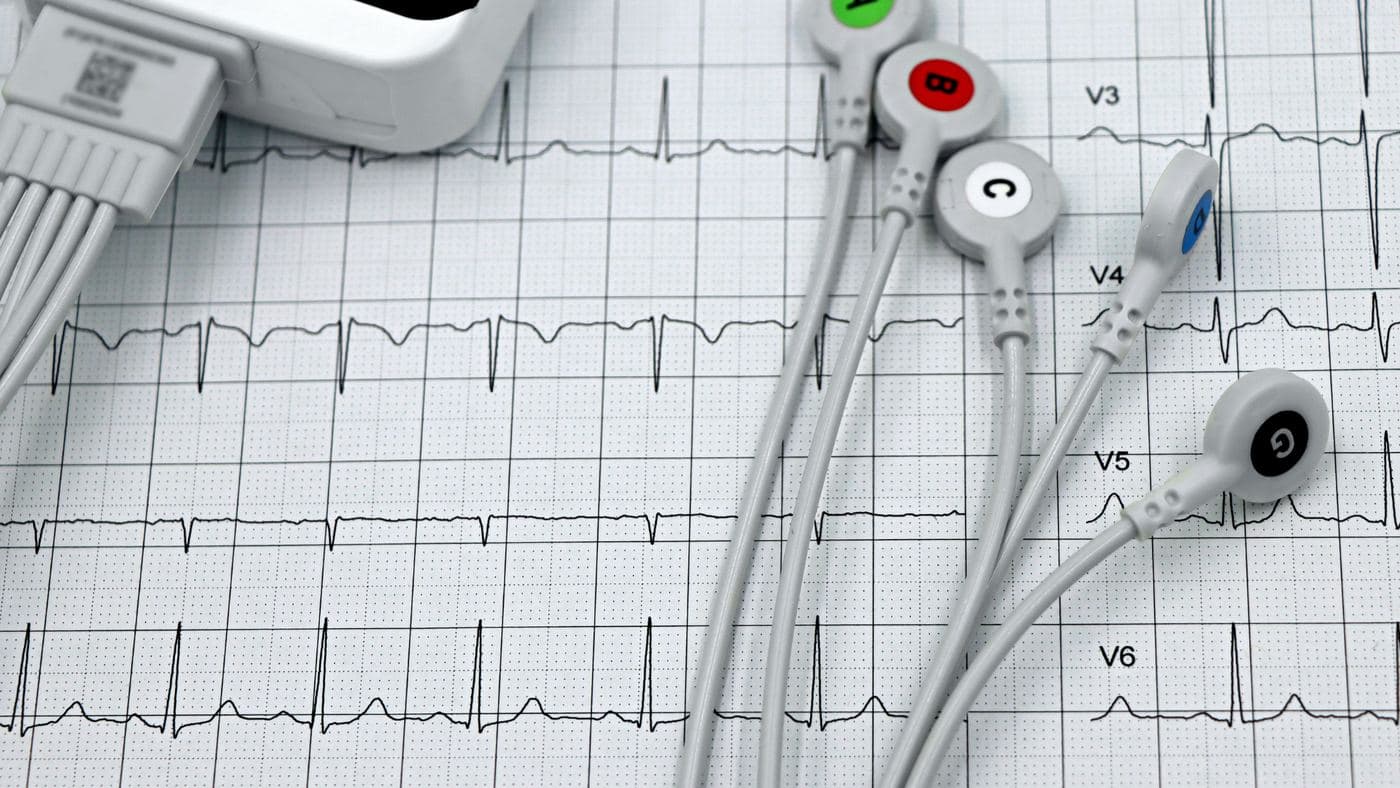
If you're searching for a private heart scan in Surrey, the short answer is that a range of consultant-led cardiac scans can be booked through Kingston Cardiologist at clinics across Kingston-upon-Thames and the wider Surrey area, with prompt access to specialist assessment. What actually gets scanned depends on the question being answered. Most patients start with an echocardiogram (an ultrasound of the heart), which is the single most useful structural test in cardiology, though for other clinical questions a CT-based scan, a stress echo, a cardiac MRI or a rhythm monitor may be more appropriate.
The practical questions people have when searching for a private heart scan are usually about speed, quality and clarity, namely how quickly they can be seen, who will actually perform the scan, and how the results will be explained. The main advantage of private cardiac imaging is not the scanner itself, it is the joined-up nature of the assessment. Kingston Cardiologist offers prompt access to specialist assessment, and investigations can often be coordinated alongside or following consultation, so the history, the imaging and the plan are handled by one consultant rather than split across separate appointments.
What "Private Heart Scan" Actually Means
A heart scan isn't a single test. It's an umbrella term covering several different investigations, each of which looks at the heart in a different way. In private practice in Surrey, the most commonly requested scans include:
Echocardiogram (heart ultrasound). The workhorse of cardiology. A safe, painless ultrasound scan that shows the size, structure and function of your heart chambers and valves in real time. It takes around 30 to 45 minutes and involves no radiation. It is the usual first-line structural assessment in cardiology, and it can often be coordinated alongside or following consultation.
Stress echocardiogram. An echo performed before and after exercise, or with a medication that stresses the heart. This adds information about how the heart muscle behaves under load, which is particularly useful when investigating chest pain or borderline valve problems.
CT coronary angiogram. A CT scan that directly visualises the coronary arteries after an injection of contrast dye. National guidance now recommends this as a first-line test for many patients with stable chest pain because it gives direct anatomical information about the arteries.
Coronary calcium score scan. A short, low-dose CT scan that measures calcified plaque in the coronary arteries. This is a genuinely useful risk-stratification tool for people without symptoms who want a clearer picture of their long-term cardiovascular risk. If you'd like more detail, my write-up on what to expect from a coronary calcium score scan covers this in depth.
Cardiac MRI. A specialised scan that gives exceptional detail of the heart muscle, including areas of scarring or inflammation. Cardiac MRI is particularly useful for cardiomyopathies, recurrent pericarditis and detailed assessment of previous heart damage.
Ambulatory ECG monitoring (Holter or event monitor). Not technically a scan, but often part of the same private imaging pathway when we're investigating rhythm problems or intermittent symptoms.
The right heart scan depends entirely on the clinical question. This is why any private heart scan should ideally follow a proper consultation rather than being booked in isolation. A scan without context can generate more anxiety than clarity.
Why Patients Choose Private Cardiac Imaging in Surrey
The reasons people choose a private heart scan in Surrey are usually a mix of speed, thoroughness and continuity.
Speed. NHS cardiology services prioritise patients by clinical urgency, and anyone with urgent symptoms should be assessed through that route or through 999 or 111 as appropriate. Private practice sits alongside NHS care rather than replacing it, and it offers prompt access to specialist assessment for people who want their ongoing symptoms looked at directly by a consultant.
Thoroughness. A new private consultation typically lasts around 30 minutes and a follow-up around 20 minutes. That time genuinely matters when there is a complex history to unpick.
Results explained by the person who scanned you. Rather than the scan being done in one department and reported later by another, private imaging is often performed and interpreted by the same consultant cardiologist, so the findings can be discussed with you directly.
Continuity of care. The consultant who sees you first, performs the scan and interprets the images is the same person who follows you up afterwards. Continuity of this kind helps, because subtle findings, changes over time and personal context are easier to recognise when one clinician holds the whole picture.
Peace of mind. For people with a strong family history of heart disease, or those who would like a specialist opinion alongside the care their GP is already providing, cardiac imaging can add detail that a resting examination alone cannot.
What to Expect from a Private Heart Scan Appointment
The practical experience of a private heart scan in Surrey is built around answering your question clearly, with the consultation, the imaging and the explanation joined up rather than fragmented.
A typical appointment starts with a detailed history. We talk through your symptoms, your medical background, your family history, your lifestyle and anything else relevant. This usually takes 15 to 20 minutes and is the part of the visit that shapes everything that follows.
A physical examination follows, including listening to your heart and lungs, checking your pulse and blood pressure, and looking for signs of fluid retention or other clinical findings.
An ECG is commonly used as a baseline and can often be coordinated alongside or following consultation. It is a five-minute test that records the electrical activity of your heart and complements the structural information from a heart scan.
The heart scan itself is then performed, tailored to the specific clinical question. Most commonly this is an echocardiogram, which takes 30 to 45 minutes and involves no injections or radiation. CT-based scans are arranged at a partner imaging site, and the timing of the scan and its report depends on that site's availability.
The findings are then discussed with you face to face. The aim is that you leave with a clear understanding of what was found, what it means, and what the next steps are, whether that is reassurance, a change in lifestyle, medication, further tests or a specialist referral.
Common Reasons People Have a Private Heart Scan
The reasons patients seek out a private heart scan in Surrey are varied, but a few come up repeatedly.
Unexplained symptoms. Chest pain, palpitations, breathlessness, dizziness or reduced exercise tolerance that has not been fully explained. Chest pain that does not settle, sudden severe breathlessness or a collapse needs emergency assessment, so call 999. Where symptoms are longstanding rather than urgent, structural assessment alongside the care your GP is providing can help explain them.
Family history. A parent, sibling or child with a heart attack, cardiomyopathy or sudden cardiac death before the age of 60 is a good reason to have a proper structural and functional assessment.
A heart murmur picked up on examination. Many murmurs are innocent, but the only way to know for sure is with an echocardiogram.
Recent GP concern. An abnormal ECG, a raised blood pressure reading, a rise in cholesterol or a borderline risk calculator result can all warrant more detailed assessment.
Wearable device alerts. Smartwatches and fitness trackers increasingly flag an unusual heart rate or a possible arrhythmia. Some findings turn out to be significant and many do not, and a proper cardiac assessment is the way to tell the difference.
Executive health checks. Many senior professionals in Surrey and the surrounding areas want a genuinely thorough baseline assessment of their cardiovascular health.
Athletes and returning-to-sport assessments. Adults returning to endurance sport, or younger athletes with symptoms during training, benefit from proper structural imaging alongside their standard fitness assessment.
Preparation for non-cardiac surgery. Patients undergoing significant elective surgery may need cardiac clearance, and a heart scan is often the most useful part of that assessment.
Choosing Where to Have Your Private Heart Scan
Where you have your heart scan matters as much as whether you have one. A few points worth considering when choosing.
Consultant-led scanning. There are advantages to a consultant-led echocardiogram over a scan performed by one team and reported later by another, because the cardiologist running the scan can adapt it in real time to the clinical question and answer specific concerns on the spot.
How the results reach you. Some services involve a scan on one day and a report some time later, and it is worth asking who will interpret the images and how the findings will be explained. A model where the scan, the interpretation and the consultation sit together tends to be less stressful.
Location and accessibility. For patients in Surrey, having appointments available in Kingston-upon-Thames, Wimbledon or central London (rather than only in central hospitals) makes a real practical difference. Parking, travel time and how the appointment fits around work all matter.
Access to onward imaging. No single scan answers every question. A good private cardiology service has direct access to CT coronary angiography, cardiac MRI, ambulatory monitoring and, where needed, invasive investigations, so patients don't need to be referred out to a completely separate provider if further tests are needed.
Continuity for follow-up. The value of a scan often comes from what happens next. Having a cardiologist who will follow you up personally, rather than handing over to another team, makes long-term care much more coherent.
When to Consider Booking a Private Heart Scan
Some symptoms need urgent attention rather than a planned appointment. Call 999 if you have chest pain or pressure that does not settle within 15 minutes, sudden severe breathlessness, or if you collapse or lose consciousness. Call 111 or contact your GP urgently for symptoms that are worrying but not an emergency, such as breathlessness that has been getting steadily worse, repeated near-fainting, or frequent palpitations. Once anything urgent has been excluded, new or progressive breathlessness, exertional chest discomfort, palpitations, or any new symptom in someone with a strong family history of heart disease all warrant a proper cardiology review.
Beyond symptoms, there are several situations where a proactive private heart scan can be genuinely worthwhile. A strong family history of heart disease, especially at a young age. Borderline cholesterol or blood pressure results where a clearer picture would help settle treatment decisions. Recent unusual readings from a wearable device. Or simply a desire to have a proper baseline assessment before your 50s or 60s.
A heart scan is most useful when the result is used as a starting point for informed decisions about long-term health, whether that is the confidence to continue with a busy lifestyle, the motivation to make sustainable changes, or the clarity of knowing where you stand.
Conclusion
A private heart scan in Surrey can be one of the most useful investments you make in your long-term health, provided it's done properly, in the right context, and interpreted by an experienced consultant. The scan itself is only part of the picture. The real value comes from the full pathway, being a proper history, a thorough examination, the right imaging for the question being asked, and a clear plan that fits your life rather than a report you have to interpret alone. When those pieces are in place, the result is the clarity people come for, and often a clearer sense of how to look after their heart from here.
If you'd like to arrange a private heart scan in Surrey, are experiencing symptoms that concern you, or would like a proactive cardiovascular assessment, you can contact me, Dr Roy Jogiya, at Kingston Cardiologist to arrange a private consultation. Appointments are available across Kingston-upon-Thames, Wimbledon and central London, in person and virtually, with full diagnostic support including ECG, echocardiography, and onward CT, MRI and rhythm monitoring where needed. Investigations can often be coordinated alongside or following consultation.