
Conditions
What is the difference between a heart attack and a cardiac arrest?
A heart attack is a blocked artery and a cardiac arrest is an electrical failure. How to tell them apart, how one leads to the other and what to do in each.
A heart attack and a cardiac arrest are often spoken about as if they were the same thing, but they are different emergencies with different first aid. A heart attack is a plumbing problem, where a blood clot blocks one of the arteries feeding the heart muscle. A cardiac arrest is an electrical problem, where the heart's rhythm collapses, the heart stops pumping blood and the person collapses within seconds.
The simplest way to tell them apart is that someone having a heart attack is usually awake, while someone in cardiac arrest is unconscious and not breathing normally. The British Heart Foundation describes a cardiac arrest as an electrical issue in which the person will be unconscious, and a heart attack as a circulatory issue in which the person is likely to be conscious. Both need a 999 call.
The Two Side by Side
- Cause. A heart attack is a blocked coronary artery, usually by a clot. A cardiac arrest is a failure of the heart's electrical rhythm.
- What the heart is doing. In a heart attack the heart is still beating and pumping blood. In a cardiac arrest it has stopped pumping.
- What you see. A person having a heart attack is usually conscious and breathing, often in pain. A person in cardiac arrest has collapsed, is unresponsive and is not breathing normally, though they may make gasping noises.
- What to do. For a heart attack, call 999 and keep the person resting. For a cardiac arrest, call 999, start CPR and send someone for a defibrillator.
What Happens in a Heart Attack
Heart attacks usually happen in people with coronary artery disease, where fatty deposits have built up in the artery walls. A clot forming on one of them can block the artery, and the longer the heart muscle beyond it goes without oxygen, the more of it is damaged.
The NHS lists the symptoms as chest pain that may feel like crushing or squeezing and may spread to the arm, neck and jaw, shortness of breath, feeling or being sick, a feeling like indigestion, sweating, and pale, blue or grey skin. Some people feel heaviness or discomfort rather than severe pain, and women in particular can have symptoms that do not fit the textbook picture, as we explain in why heart symptoms in women are often missed.
Treatment happens in hospital and aims to restore blood flow to the heart muscle. That can mean medicines, or a coronary angiogram during which the blocked artery is opened with a stent. Our heart attack page covers the condition in more depth.
What Happens in a Cardiac Arrest
In a cardiac arrest the heart's electrical system fails. Instead of an organised beat, the main pumping chambers either quiver uselessly, which is ventricular fibrillation, or race so fast they cannot fill, which is ventricular tachycardia. The BHF explains that some abnormal rhythms mean the heart cannot pump blood around the body, and without blood the brain loses consciousness within moments.
A cardiac arrest usually comes without warning. The person collapses, does not respond and is not breathing normally. Without immediate help they will die.
How One Can Lead to the Other
The two are linked. A heart attack is one of the causes of a cardiac arrest, because heart muscle starved of oxygen can trigger a dangerous rhythm. The BHF notes that someone having a heart attack is at higher risk of ventricular fibrillation, and that is one reason a suspected heart attack is always a 999 call rather than a wait and see.
A heart attack is not the only cause, though. The BHF lists diseases of the heart muscle such as cardiomyopathy, inherited electrical conditions, heart failure, heart valve disease and severe inflammation of the heart muscle among the conditions that can lead to a cardiac arrest. Some of those conditions run in families, which is why the BHF advises that relatives may need assessment at a specialist centre when there is a history of cardiac arrest or unexplained sudden death.
What to Do in Each Emergency
If You Think Someone Is Having a Heart Attack
Call 999. The NHS advises the person to sit and rest on the floor with their knees bent and their back supported, to take a 300mg aspirin if one is available and they are not allergic to it, and to use their GTN spray if they have angina and carry it. Keep checking that they are still responding and breathing. Do not let them drive themselves to hospital.
If Someone Has Collapsed and Is Not Breathing Normally
This is a cardiac arrest until proven otherwise. The BHF sets out five steps for adult CPR.
- Check for a response. Shake their shoulders firmly and ask loudly if they are all right.
- Call 999. The call handler will give you instructions while you wait for help.
- Send for a defibrillator. If someone is with you, ask them to find the nearest one.
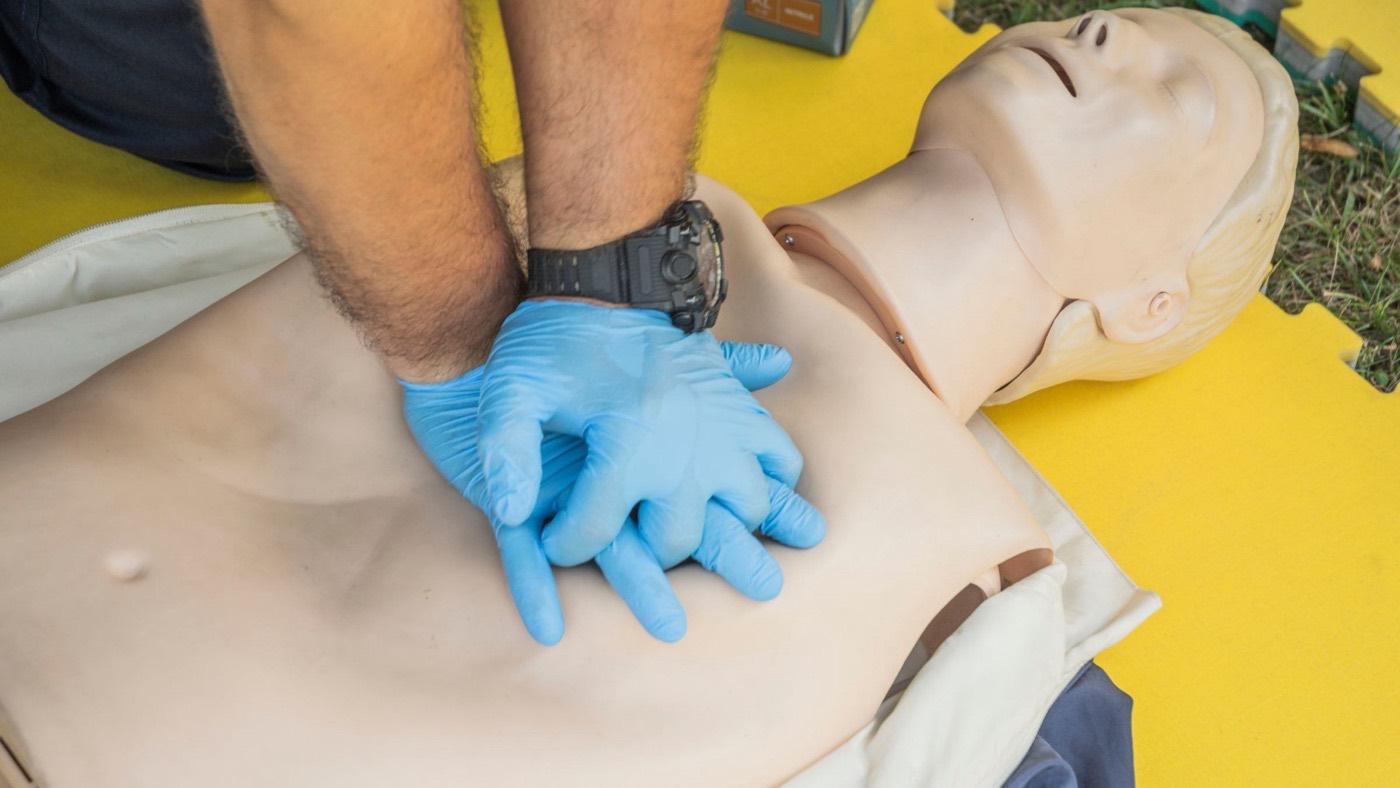
- Start chest compressions. With the heel of your hand in the centre of the chest, press down firmly at about two compressions a second, to the beat of Stayin' Alive.
- Use the defibrillator as soon as it arrives. It talks you through each step, and you do not need training.
Keep going until the emergency services arrive, the person regains consciousness or you are too exhausted to continue. The BHF reassures people that a cracked rib can happen and can be treated, and that CPR and a defibrillator can double a person's chance of survival. To practise first, the BHF's free RevivR course teaches CPR in 15 minutes with a phone and a cushion. St John Ambulance also has step by step guidance, and it is the CPR guide the NHS points to.
Why the First Few Minutes Matter So Much
The figures for England show how much depends on the people nearby. In the national registry's figures for 2022, fewer than one in 12 people survived an out of hospital cardiac arrest to 30 days. About 80 per cent of those cardiac arrests happened at home. Members of the public gave CPR in over 70 per cent of cases, but a public access defibrillator was used in fewer than one in ten.
That last number is the one most worth changing. A defibrillator delivers the controlled shock that can get the heart beating normally again, and the BHF notes that public access defibrillators are often in places like train stations and shopping centres. Knowing where your nearest one is takes a minute and could make the difference.
Can Either One Be Seen Coming?
A heart attack often has warning signs. Chest discomfort that comes on with exertion and settles with rest is the typical pattern of angina, and it means the heart's arteries are struggling to keep up. Our article on what angina is explains the pattern, and the main risk factors for heart disease, such as high blood pressure, high cholesterol, smoking and diabetes, are where prevention starts.
A cardiac arrest is harder to predict, but some signs deserve attention before anything happens. Two of them are emergencies in their own right. The NHS advises calling 999 if someone has fainted while exercising, or has fainted with chest pain or palpitations. Others call for a specialist assessment.
- A blackout with no warning at all, once the person has recovered and been checked.
- Palpitations that come with dizziness or near fainting. If they are happening now and do not settle, that is a 999 call too.
- A family history of sudden unexplained death at a young age, or of an inherited heart condition. Our article on family history and your heart health covers what to ask relatives.
- A known heart muscle condition, such as a weakened heart after a previous heart attack.
For people found to be at high risk, treatment can include an implantable cardioverter defibrillator, a small device that watches the heart rhythm and shocks it back to normal if a dangerous rhythm starts. The BHF lists it alongside ablation among treatments that may follow a cardiac arrest.
Where a Cardiologist Fits In
Dr Jogiya's main specialist interest is heart rhythm disorders, the field that deals with the electrical problems behind cardiac arrest, and he holds the British Heart Rhythm Society examination in electrophysiology and devices. His general cardiology work covers chest pain and suspected coronary disease. Assessment usually starts with an ECG and an echocardiogram, followed by rhythm monitoring or imaging of the coronary arteries where the history calls for it. The full range is listed on our diagnostic tests page.
If you have chest pain now that is severe, has lasted more than 15 minutes or does not ease with rest, or someone has collapsed, call 999 rather than booking an appointment.
Conclusion
A heart attack is a blocked artery and a cardiac arrest is an electrical failure. In a heart attack the person is usually conscious and in pain, and the priority is a 999 call and rest. In a cardiac arrest the person has collapsed and is not breathing normally, and the priority is a 999 call, CPR and a defibrillator, straight away.
One can lead to the other, which is why both are always emergencies. Recognising the difference, and knowing where your nearest defibrillator is, could save a life.
If you have symptoms such as exertional chest discomfort, unexplained blackouts or palpitations, or a family history of sudden cardiac death, you can contact us at Kingston Cardiologist to arrange a cardiology consultation in Kingston upon Thames or central London.